Why Prefab?
First, I think it’s important to define prefabicated panelized construction. There’s a lot of confusion about the difference between panelized construction and modular construction. With modular construction, the interior is largely complete, including drywall, cabinets, and fixtures. The exterior has to be completed, and the garage is often framed on-site.
Prefabricated panelized construction only refers to the shell, or building envelope. It is typically very high-performance, with a strong focus on insulation and air sealing. Since the panels are built in a factory, quality and tolerances are extremely good. Everything is modeled before the first panel is manufactured, so any mistakes or issues are addressed early in the design phase. Once the enclosure is assembled, the interior and exterior are completed in the same way as traditional home construction.
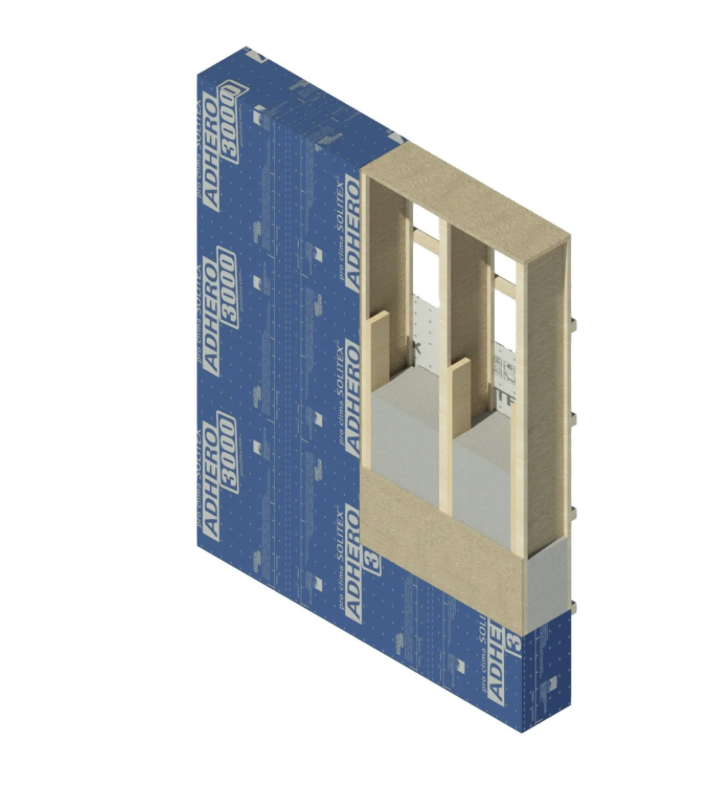
Image courtesy of B.Public Prefab
As we looked at options for building, a prefab enclosure began to make a lot of sense. It offers so many benefits over conventional framing and the standard building practices:
Shortens the construction timeline. Once the panels are delivered, the enclosure is assembled in 4-5 days
Quality and consistency
Consistent high R-Value, while avoiding spray foam
Carbon storing / Low embodied energy
> 70% post-consumer recycled content by weight
No dangerous off-gassing
Free of urea-formaldehyde & foam
A big question I get…is it more expensive than framing on-site? And the answer is yes. I’m not sure how much more since I didn’t price on-site framing. However, all the benefits listed above were very important to us, and investing in the envelope will allow us to save a significant amount on mechanicals (more on this later). When you factor it all together, my guess is we are paying 10-20% going the prefab route.
There are several great companies offering prefabricated panels. It is no secret that there is a shortage of workers, not just in Crested Butte, but across the nation. This method of building helps address these challenges while delivering a product that is better for the environment and the home's occupants. A no-brainer, if you ask me!