Why?
I woke up early this morning, around 4:00 AM, which isn’t uncommon. I was thinking of all the upcoming logistics for our build. Getting the site backfilled and graded, pouring the garage slab, clearing areas for material deliveries on July 1st, and being ready for the B.Public crew on July 6th. It’s not dread or fear, it’s just an overwhelming desire to nail our schedule. I actually enjoy it on some level, even if it leads to a poor sleep score!
As the sun came up, I was greeted with a reminder as to WHY we are building the house we are building. Why would we invest so much in a B.Public panelized envelope? Why are we choosing to invest in a state-of-the-art energy recovery ventilator system? Why are we so adamant about going all-electric? Why are we putting in a heat pump mini-split system that can both heat and cool the house (actually, no one questions this decision)? After all, that means we can’t afford a larger house. Or, a Wolf range. Or, a huge garage.
These images answer the WHY:
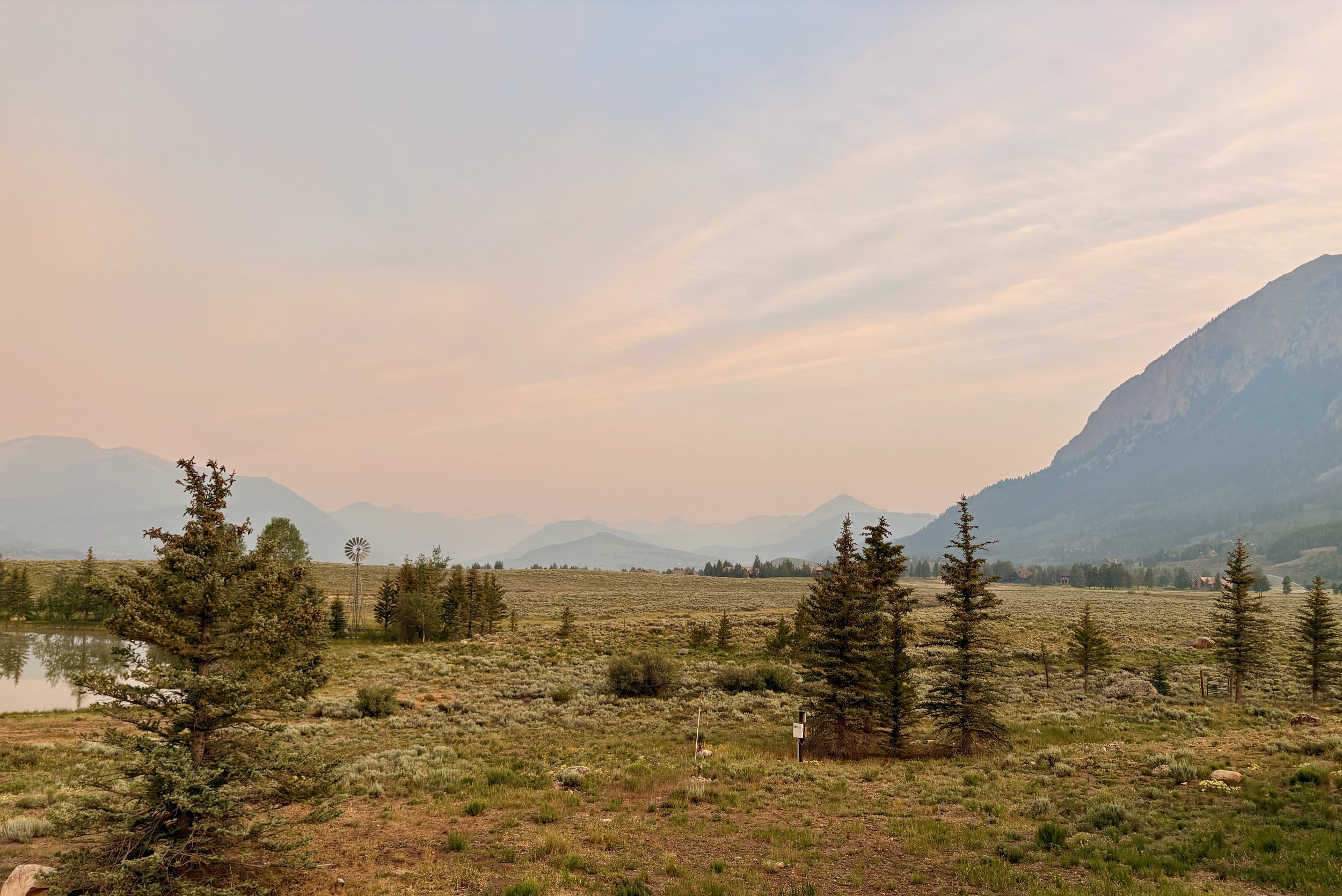
Paradise Divide
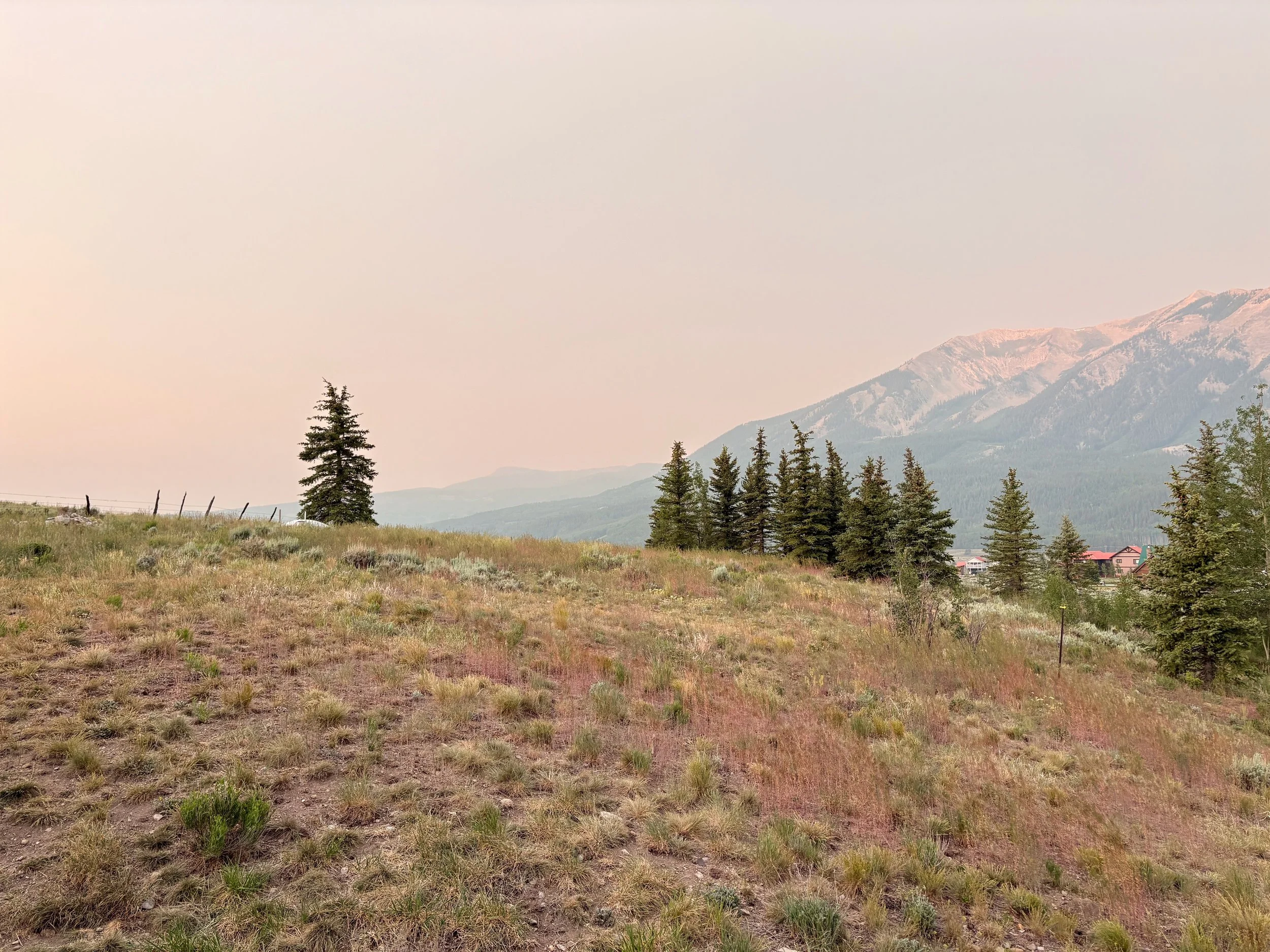
Whetstone and Red Mountain (barely visible)
Wildfire season has officially started, and it seems, sadly, this is our new reality in the summer. Luckily, the fires are not close to us. I’m not sure where the smoke is originating, but with the extreme winds we’ve been having this month, it could be anywhere out West. It is having a major negative impact on our air quality, affecting not just those of us who live here full-time but also second-home owners and visitors who come here to enjoy nature and fresh, clean air. If this is the new normal, what does this do to our long-term viability as a tourist destination?
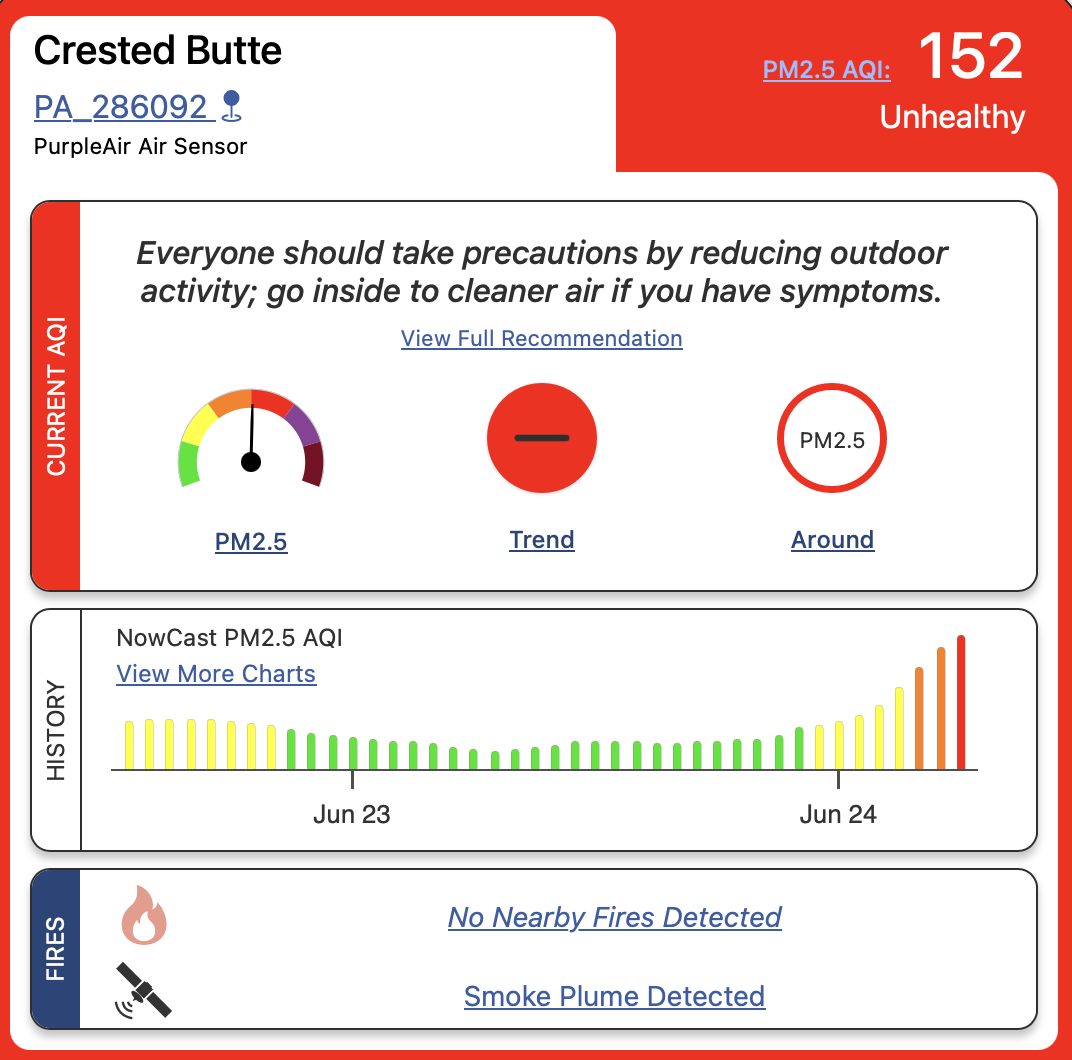
From AirNow, https://fire.airnow.gov/#8.93/38.8774/-106.9945
I’m a firm believer that we have to change the way we build. Not just to weather the summer wildfire season, but hopefully to reduce the number of wildfires in the future. Answering the WHY for us:
B.Public: Our home will be very tight (basically passive-house standards), use dense-packed cellulose instead of spray foam, which sequesters carbon and reduces the embodied impact of construction, and will be ridiculously energy-efficient. It will be more comfortable than a comparable home built to “code”.
State-of-the-art ERV: I had several folks say I could install a much cheaper ERV. Probably for $3-4K vs. $11K. Sure, a cheaper system checks the code box, but does it really do what we need? On days like today with unhealthy air quality, we can keep the house closed up, have extremely clean, filtered air, and not have to sleep or live with our windows open. We can take advantage of nature’s air conditioning on days with good air quality.
Going all-electric: I hear a lot of belly aching about this one. Well, it’s simple. We have to stop burning fossil fuels in our homes. Our homes contribute almost as much greenhouse gas emissions as light cars and trucks. This should be clear if you look outside this morning. As our electric grid increasingly shifts to renewable energy, which is far cheaper to bring online than coal or natural gas power plants, an all-electric home becomes more sustainable for the environment. Consider our local electric goals. Tri-State (where GCEA gets the majority of its electricity) targets 70% renewable by 2030 → GCEA builds its 7% local on top of that → GCEA members end up at roughly 77–80% clean electricity by 2030. That grid trajectory directly improves the home's carbon footprint over time without any changes to the building itself — it just gets cleaner as the grid does. Seems like a no brainer to me.
Heat pump mini-split. See the second bullet point. We can cool the house while the ERV protects our indoor air quality.
I didn’t plan on this blog post this morning until the sun came up. Sadly, it confirms that we are building the perfect house based on today's realities. I wish more folks would face reality. It is so clear. But maybe the smoke doesn’t allow deniers to see so clearly!
My next post will refocus on the build. It’s been a slow start, but things are about to get busy!